 How-to
How to Blend Custom Fragrance Notes: A Simple Guide
Table of Contents
- How to Blend Custom Fragrance Notes: A Step-by-Step Workflow
- Perfume Blending Ratios: How to Balance Top, Middle, and Base Notes
- Building Your Custom Perfume Recipe and Testing It
- Where to Learn This Hands-On
- Frequently Asked Questions
Last Updated: October 9, 2026
How to Blend Custom Fragrance Notes: A Step-by-Step Workflow
Learning to blend custom fragrance notes starts with a simple structure: build in layers, test on skin, and write everything down. At Tijon Fragrance Lab - Atlanta, we guide people through this weekly.
Custom fragrance notes are the individual scent materials, grouped as top, middle, and base, that you combine to build a complete perfume.
- Choose one top, one middle, and one base note.
- Blend in a 30/50/20 ratio.
- Rest 24 to 48 hours.
- Test on a blotter strip, then on skin.
- Adjust one note at a time and record every change.
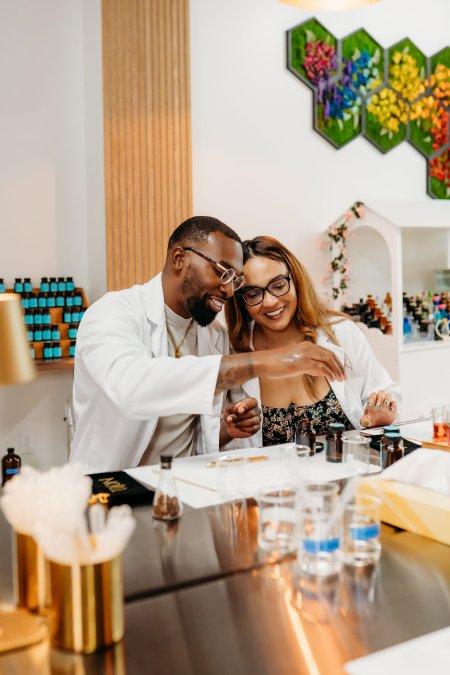
Perfume Blending Ratios: How to Balance Top, Middle, and Base Notes
Perfume blending ratios are the proportions you use for each note layer. A 30/50/20 split of top, middle, and base notes is a common starting point that gives a bright opening, a full heart, and a base that holds.
That ratio is a starting line, not a rule. Top notes last minutes; middle notes define character; base notes anchor the dry-down. If it fades too fast, raise the base; if it feels heavy, raise the top.
Fragrance accord is two or more notes that merge into a single new smell, a good accord smells like one thing, not three.
How long should you let a custom perfume recipe rest?
A custom perfume recipe should rest 24 to 48 hours before you judge it. This lets the notes marry; a blend that smells disjointed on day one often smooths out by day three.
Blending recommendations from Scento's guide to building a signature scent suggest the same 30/50/20 split and a 24 to 48 hour rest. We have found that guidance holds up in practice.
Building Your Custom Perfume Recipe and Testing It
Building your custom perfume recipe comes down to three habits: measure carefully, test on skin, and keep a written formula, skip one and you cannot repeat a blend you love.
Perfume blending tools you actually need: glass droppers or pipettes, blotter strips, small glass vials, a notebook or spreadsheet, and a carrier such as perfumer's alcohol or a light oil. Start with a small test batch measured by drops: a 30/50/20 blend of 10 drops total is 3 top, 5 middle, 2 base.
How do you test a blend properly?
Dip a blotter strip, label it, and smell right away, then again at ten minutes and one hour. Next, test on skin: body heat and skin chemistry shift a blend in ways paper never will. Apply to your inner wrist and check at one, three, and six hours.
Record the opening, heart, and dry-down separately to build a repeatable scent profile.
How do you fix an unbalanced blend?
An unbalanced blend usually has one layer drowning out the others. Troubleshoot it like this:
| Problem | Likely Cause | Fix |
|---|---|---|
| Fades in 30 minutes | Too little base | Add 1-2 drops of a base note |
| Smells sharp or harsh | Top note overload | Cut top note, add middle |
| Muddy or heavy | Base note overload | Raise top or middle |
Adjust one thing per test batch. Change two variables at once and you learn nothing.
Safety and dilution
Fragrance materials are concentrated, so dilute before they touch skin, a common approach is 15 to 20 percent fragrance oil in a carrier.
The IFRA standards for fragrance safety set limits on how much of certain materials can be used in a finished product. If you have sensitive skin or react to strong scents, start with a lower concentration and patch test on a small area first.
Keeping your formula
Write down every batch: date, exact drops of each material, carrier, and impressions at each stage. A simple spreadsheet works fine.
Digital tracking helps too. A 2024 study on machine learning for fragrance formulation shows researchers are using data-driven methods to model scent combinations, which tells you something useful: scent blending is a recordable, repeatable process, not pure instinct.
Where to Learn This Hands-On
Scent is learned by smelling, comparing, and adjusting in real time.
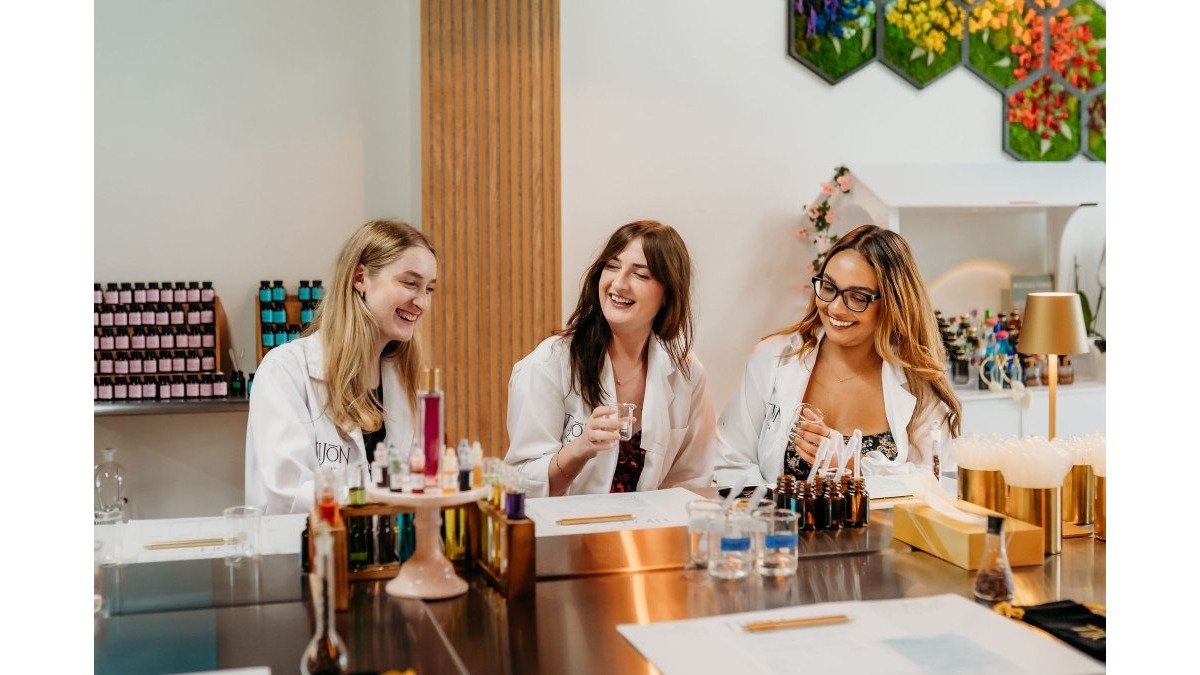
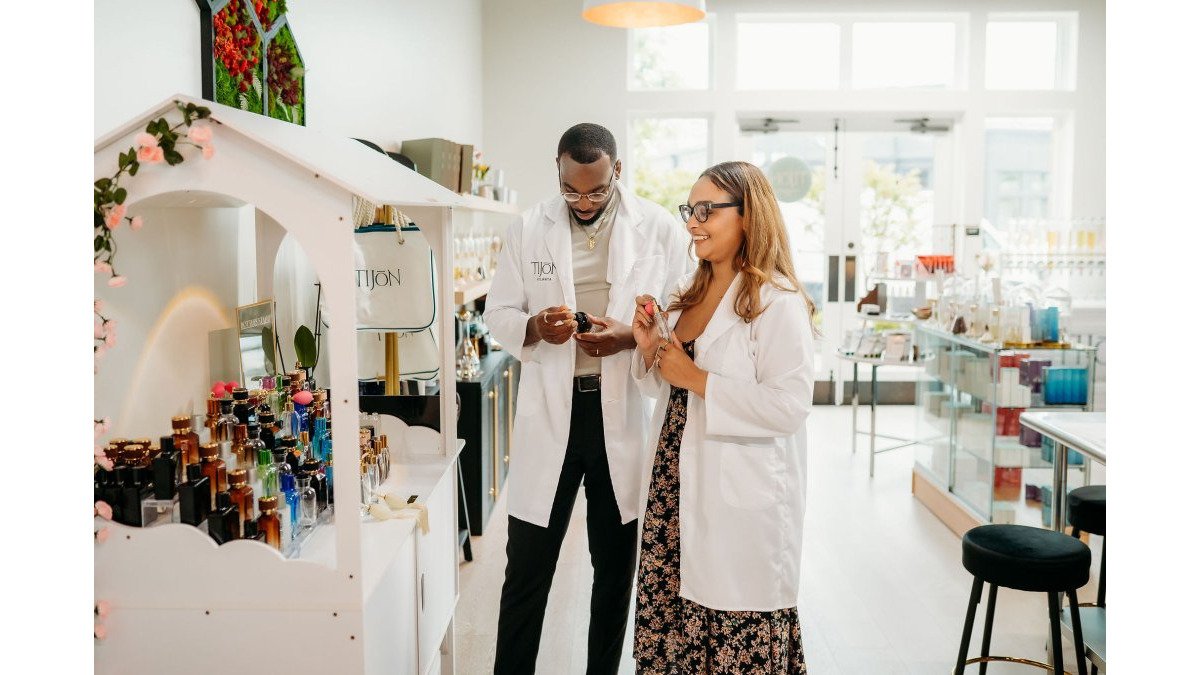
At Tijon Fragrance Lab - Atlanta, you work with an organ of approximately 300 oils and build your own blend with a guide beside you. No experience needed, and we bottle by hand in-shop to keep your finished scent fresh.
If you want to try this with a group, our wedding fragrance and bridal party sessions and private events give everyone their own formula to take home.
Frequently Asked Questions
How do you blend fragrance notes?
Start with your base note, then add middle and top notes. A common approach is a 30/50/20 split: 30% top notes, 50% middle notes, and 20% base notes. Blend small test batches first, use blotter strips to evaluate how the scent opens and dries down, and record every drop so you can repeat or adjust the formula later.
What is the best ratio for blending perfume notes?
Many perfumers use a 30/50/20 ratio of top, middle, and base notes as a starting point. If you want a lighter daytime scent, increase top notes to 40%. For a richer evening fragrance, push base notes to 30%. These ratios are guides, not rules. Adjust based on how the blend smells on your skin after 20 minutes and again after two hours.
How long should a perfume blend rest before you evaluate it?
Let your blend rest for 24 to 48 hours before you judge it. During this time, the alcohol and oils settle, and the notes start to merge. Some blenders wait a full week for a more accurate read. If the scent still smells sharp or flat after resting, adjust the ratio and let the next batch rest again before testing.
Blending custom fragrance notes is a skill, not a talent. It rewards patience, note-taking, and a willingness to test the same blend three times before you decide.
If you would rather learn it with expert guidance and a full organ of oils in front of you, Tijon Fragrance Lab - Atlanta is built for exactly that. You get step-by-step instruction, hands-on bottling, and a signature scent that is yours alone. Book a class and leave with a fragrance nobody else is wearing.